Exploring the Impact of Your Diet on the Environment: Why Eating Sustainably Matters and 4 Ways To Help the Environment
Does what you eat impact the environment?
Don't you love how food is connected to everything? From politics to art, even sustainability! My internship site is trying to become more sustainable, so they asked me to put together a demo for sustainable eating, and I actually learned a lot! I always try to approach these topics from a cynical perspective because, unfortunately, my audience will too. People love to contradict nutrition, so I try to be prepared. So why does eating more sustainably matter? Here's my analysis:
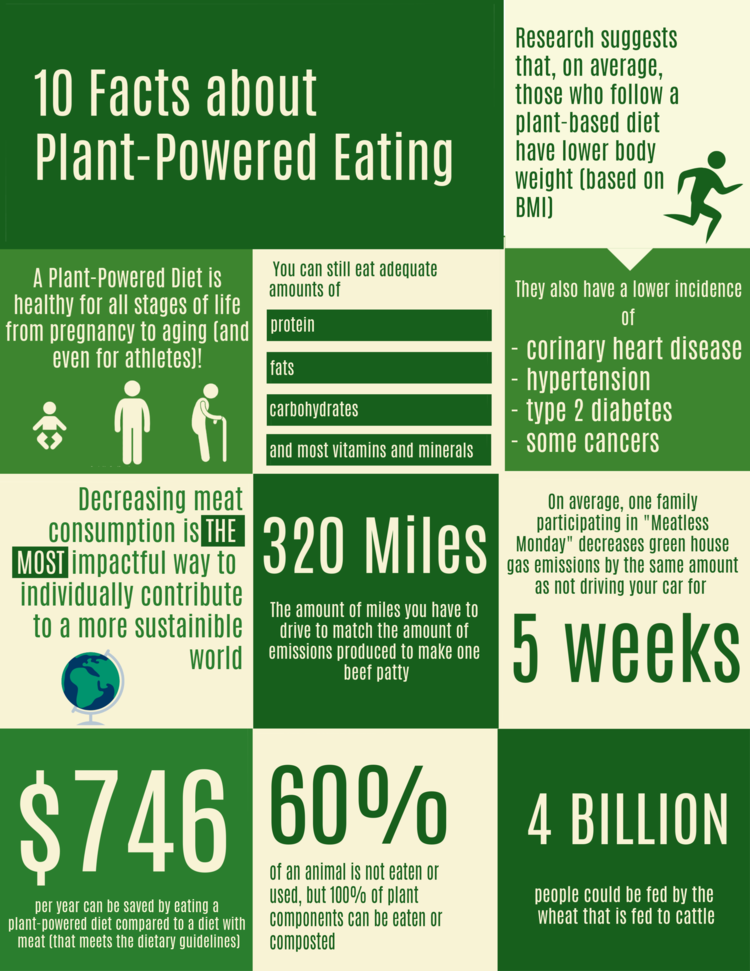
I made this myself!
What is happening
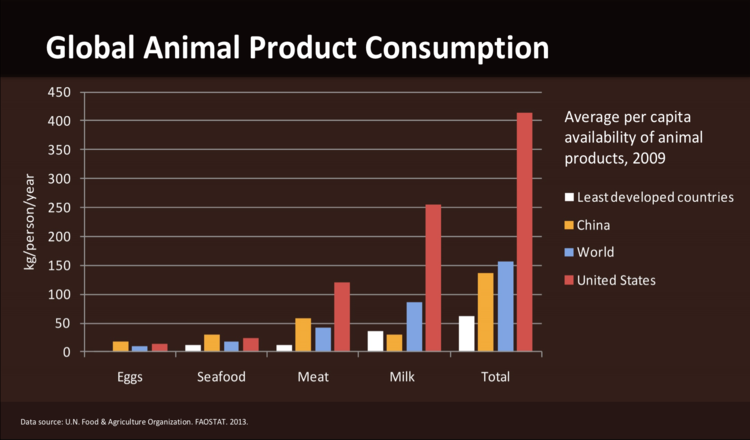
As countries develop better economies, they produce more food. (Notice that I didn't say they are eating more food.) This makes sense because when I have more money, I don't monitor what I buy at the grocery store as much, and I buy more food that I may not end up eating. This is happening in entire countries. It isn't a bad phenomenon because the world has a lot of people it needs to feed.
Amazing technological advancements in agriculture and food production have helped feed the world, but now many people are dying from being overfed (from stroke, diabetes, cancer, etc.). People aren't eating bunches of spinach; they're eating Little Debbies and Ramen. People are also eating out more often, and restaurants have to estimate how much food to buy, which means more food is thrown away, as opposed to buying your food from the grocery store for the exact amount you need for your family. Restaurants have to estimate how many customers they think they'll have and buy the food a couple of days in advance. What does this have to do with sustainability? Stay tuned...
Why it Matters
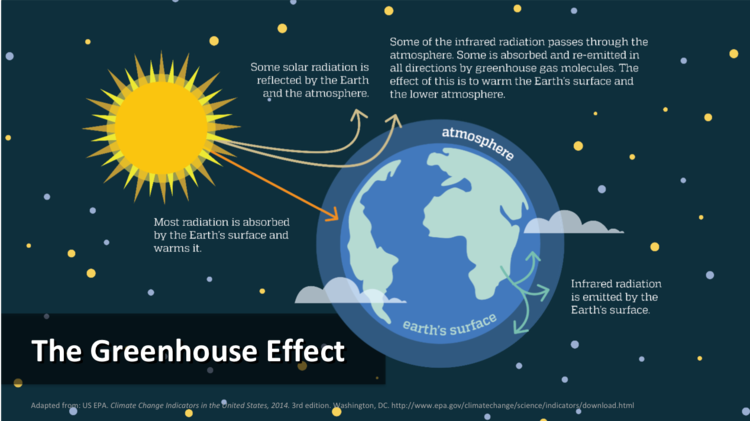
If you didn't already know, sustainability can mean different things. The root is "to sustain" or last for a very long time. So what I mean in this article is eating food that will help the earth last for a very long time. In a roundabout way, food that will help people "last a very long time". But anyway, producing food has a big impact on the world's resources. Growing food uses a lot of water, land, soil, and emits many greenhouse gases that cause the world to warm - "global warming". Meat, specifically, has the biggest detrimental impact on the environment. Farmers have to use water to grow the wheat and feed the animals. Cows emit lots of greenhouse gas (through burping) that contributes to global warming. Meat, dairy, and corn products (high fructose corn syrup, chips, etc.) emit 69% of the total greenhouse gases for all food. That leaves the healthier food (fish, eggs, whole grains, and fruits and vegetables) to emit only about 30% of the detrimental gases.
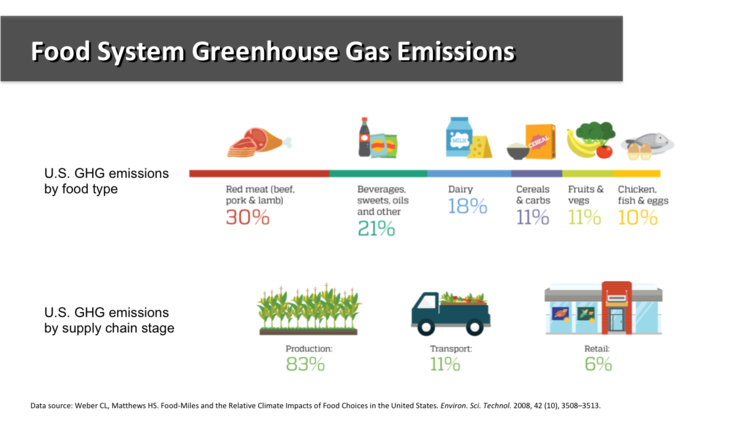
Phosphorus is used as fertilizer for plants, and it is an extremely valuable resource because it takes thousands of years to make. No biggie, right? Wrong. Also, 60% of the cow isn't even used! The bones, head, feet, skin, etc., are just wasted at the slaughterhouse. There's no way to safely reuse these parts of the cow, so they just go to the landfill. This means all the resources used to make the animal are wasted. Meanwhile, all the vegetables can be used for either consumption or composting.
Finally, food waste negatively impacts the environment because valuable resources are going straight into the trash. Unless you recycle or compost, your trash is burned at landfills, which emits even more harmful greenhouse gases! With food waste coming from restaurants, grocery stores, and even your home, this can really add up.
But is all of this inevitable? Don't we have to have food? Yes and no...
What you can do about it!
Okay, I know this is a lot of information, and this is only really skimming the surface. But can you really do anything about it? Yes! Researchers predict that there will be an 80% increase in emissions of greenhouse gases by 2050. If the whole population switched to a more plant-based or even just Mediterranean diet, there would be no change in the amount of greenhouse gases (which is a benefit!) And there would be an estimated 16-41% decrease in diabetes and a 20-26% decrease in coronary heart disease. Eating more plants, beans, and less refined sugar uses fewer environmental resources and is better for your health!
I’m very bad about not doing something if it doesn’t have a direct impact, so that’s kind of how I feel about trying to help the environment (like what can one person really do?) but think about other shifts in the marketplace because of what consumers have demanded- more people bought gluten-free, so companies made more of these products. People watch their sodium, so Campbell’s soup is trying to figure out how to create healthier products to keep up. You can make a difference as a consumer, especially if you educate your friends and they educate their friends, and so on. And honestly, you should be eating these healthy foods so you don’t eventually get sick (not only because of the environment).
Other countries have already started implementing public policy to promote more plant-based eating on the basis of it being better for the environment. You can see that in these two examples - Belgium and the Netherlands put red meat in an "eat less" category. America hasn’t caught on yet - but it’s possible!
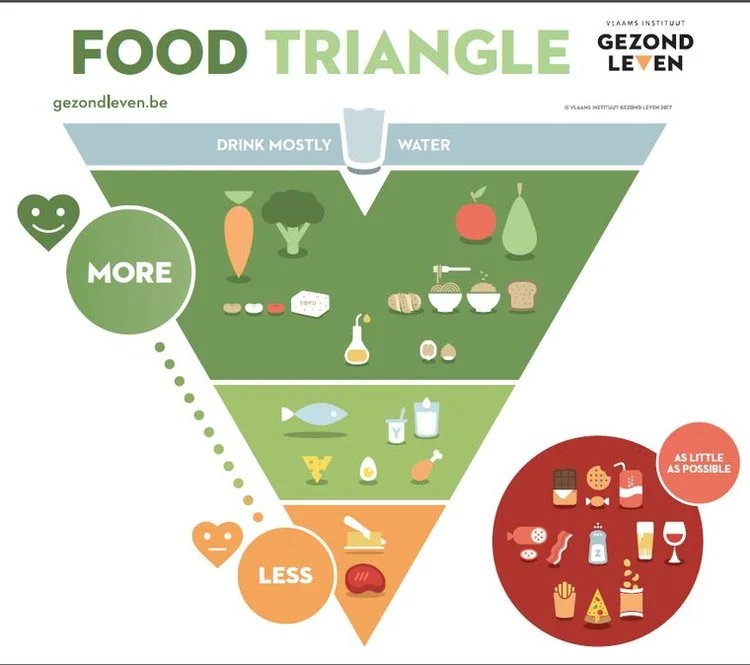
Belgium’s food guide- notice meat is in the “eat less” area
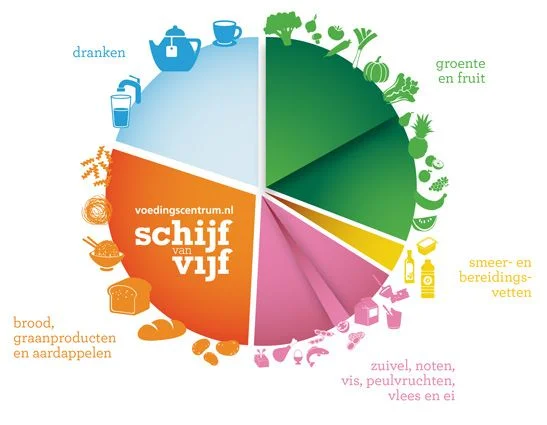
The Netherland’s food guide
I want to be clear that I'm not saying that you need to be totally plant-based or vegan (you know that I don't like any sort of strict diet). But maybe, be a little more conscious of your meat intake. Could you do chili beans tonight for dinner instead of beef? Could you order falafel instead of chicken shawarma? Fried tofu instead of fried chicken? Little things do add up.
Partcical Ways To Help
These are partical tips for being more environmentally conscious with food choices!
Eating local or organic foods can help reduce greenhouse gas emissions and benefit soil health.
Eating less meat, even one day a week, can have a big impact on the environment.
Only buying what you need and making a realistic grocery list can help reduce food waste.
Composting can be a great way to dispose of vegetable scraps and create nutrient-rich soil for future plants.